QUICK ANSWER
Beautiful winter weddings are perfect if you want a cosy, romantic atmosphere and photos that feel cinematic and real.
In the UK, winter light can be soft and flattering, candlelit rooms look incredible on camera, and guests naturally stay closer together (which means more hugs, more laughter, and a better party).
In this guide, you’ll find winter wedding photography tips, a practical winter wedding timeline, styling ideas that look amazing in photos, and simple planning tricks that keep everyone warm and relaxed, even if it rains.
Want real examples? See our Gorgeous Winter Weddings inspiration roundup.
We’re Marta May Photography – also known as THE MAYS (Marta + Artur)
We photograph weddings in a DOCU-ART style: candid documentary moments mixed with creative, cinematic portraits that still feel natural. We’re TWIA National Winners (2023) and now TWIA judges, so you’re in very safe hands.
If you’re planning a winter date and want help choosing a timeline (or you just want winter photos that look like your day felt), GET IN TOUCH HERE.
Why winter weddings look so beautiful (and photograph so well)
Winter weddings have a kind of magic you can’t fake. Everything feels closer, warmer, and more intentional, and that’s exactly what makes the photos feel so emotional.
- You get the party vibes earlier
Because it gets dark sooner, the evening atmosphere starts earlier too. Fairy lights, candlelit dinners, then straight into dancing – winter weddings often feel like they hit that “this is a celebration” moment faster.
- The light can be softer (and more flattering)
On bright winter days, the sun sits lower, which can create gentle, directional light that looks cinematic without being harsh. Even when it’s cloudy, winter light often feels calm and “even”, which is perfect for natural skin tones and cosy colour.
- Candlelight and fairy lights give instant atmosphere
Winter venues usually lean into warmth – candles, fireplaces, strings of lights, lamps, darker wood tones. That glow adds depth to photos and makes the room feel like a scene from a film (especially during ceremony and speeches).
- Guests stay closer together
In summer, people drift outside. In winter, everyone naturally gathers in the warmest spaces – which means more mingling, more reactions, more hugs, and more laughter in the same frame. Documentary photography thrives on that.
- The day feels more intimate and less “performative”
Winter weddings often have a relaxed rhythm: you arrive, you warm up, you settle in, and the day unfolds. That makes it easier to be present, and your photos end up feeling more real because you weren’t constantly thinking about “what you should do”.
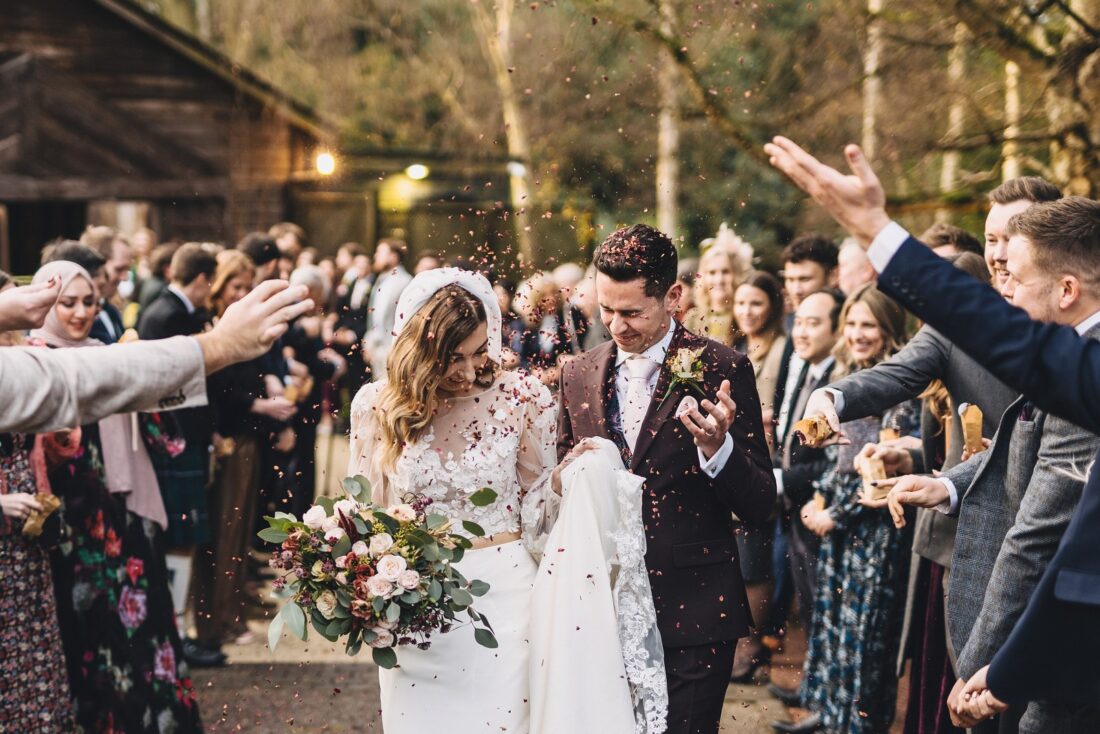
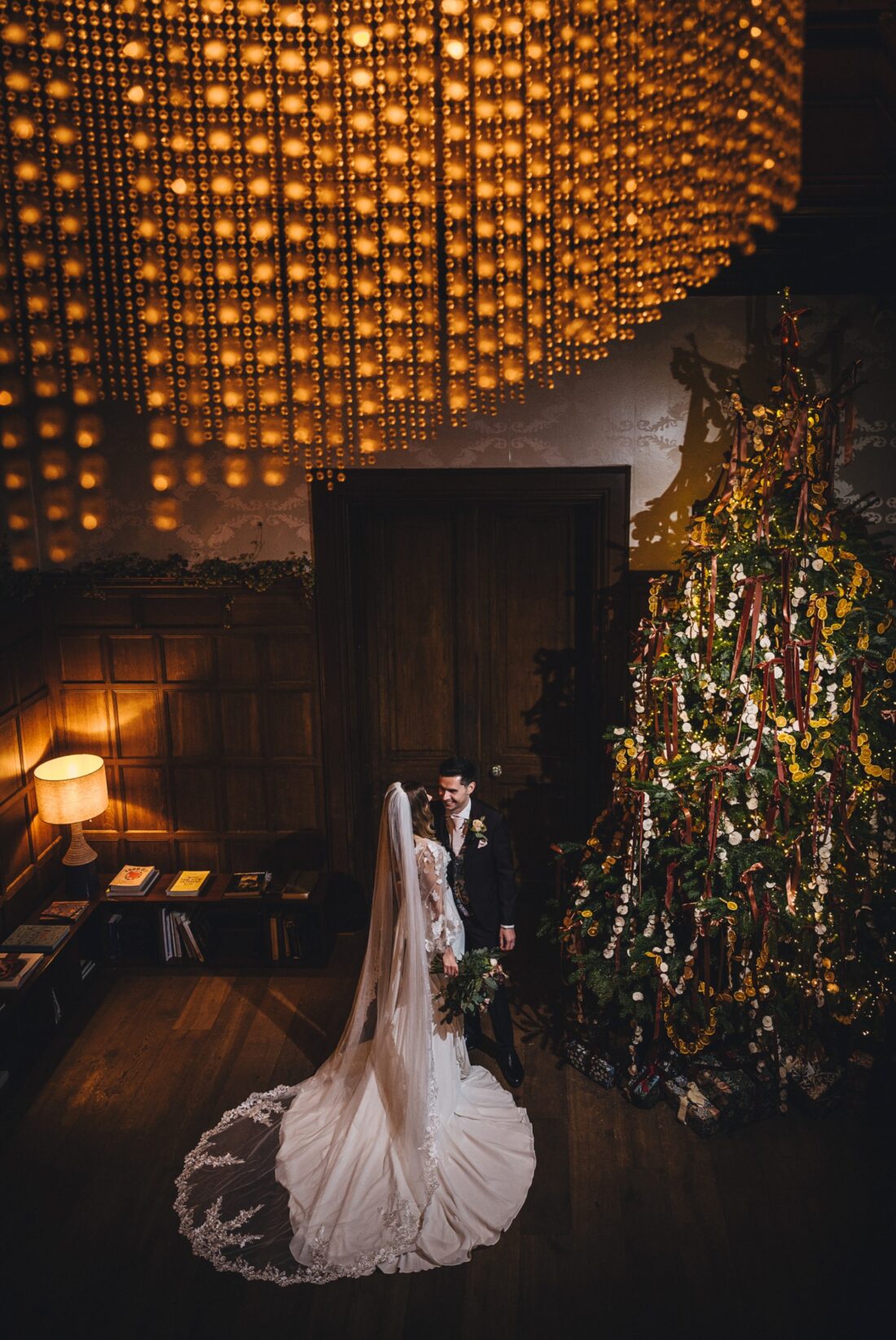
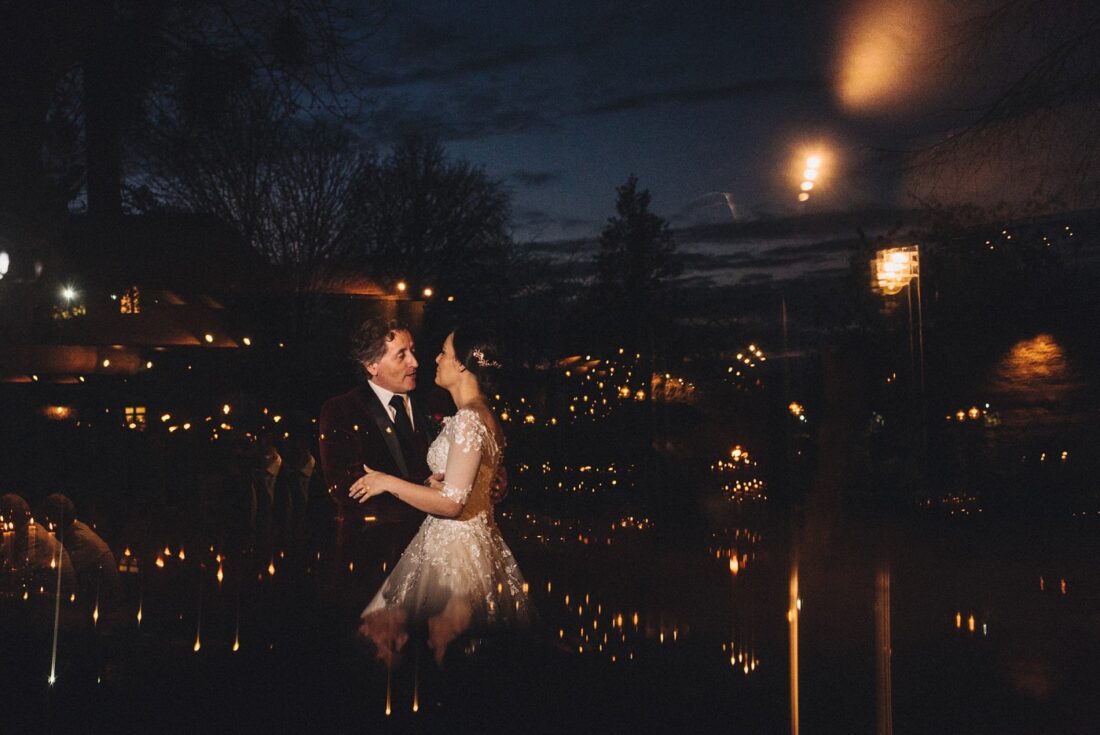
Winter weddings definitely have a magical atmosphere. Here is an example of a February wedding at Brinsop Court:
KEY FACTS: beautiful winter weddings (UK)
1. Best months: November to March (cosy venues, earlier sunsets, festive atmosphere).
2. Best ceremony time: usually 12:00–2:00pm if you want natural-light portraits before it gets dark.
3. Best photo approach: two short portrait pockets (10–15 mins in daylight + 5 mins at night for something cinematic).
4. Weather plan: assume rain and plan a “beautiful indoor version” (big windows, covered spots, candlelit corners).
5. Guest comfort: warmth wins – welcome drinks, blankets, fire pits, shorter outdoor moments.
6. Styling that photographs best: texture + glow (velvet, wool, candles, fairy lights, deep greens/burgundy/champagne).
7. Biggest winter mistake: pushing the ceremony too late and losing daylight for couple photos (happens more often than you think!).
8. Biggest winter advantage: the atmosphere starts earlier – golden-hour vibes, candlelit speeches, and a party that feels intimate fast.

The winter wedding timeline that actually works (UK)
Winter weddings are easier when you plan around daylight first, because once you’ve protected the light, everything else (photos, atmosphere, guest comfort) falls into place. Here are two simple timelines that work brilliantly in the UK.
Winter timeline option 1: “Classic winter day” (best for natural-light photos)
12:00–12:30 Getting ready finishing touches + final details
13:00 Ceremony
13:30–15:00 Drinks reception + confetti + relaxed mingling
15:00–15:20 Group photos (keep the list tight)
15:20–15:40 Couple portraits (first pocket, while it’s still bright)
16:00 Wedding breakfast
17:30–18:15 Speeches
18:15–18:25 Couple portraits (second pocket: a quick “twilight” moment)
18:30 Evening guests arrive / room reveal
19:00 First dance
19:15 onwards Dancing, fire pits, sparklers, party
Why this works: you get your couple photos done before the light disappears, and you still keep the day relaxed because the portraits are short and timed around natural breaks.
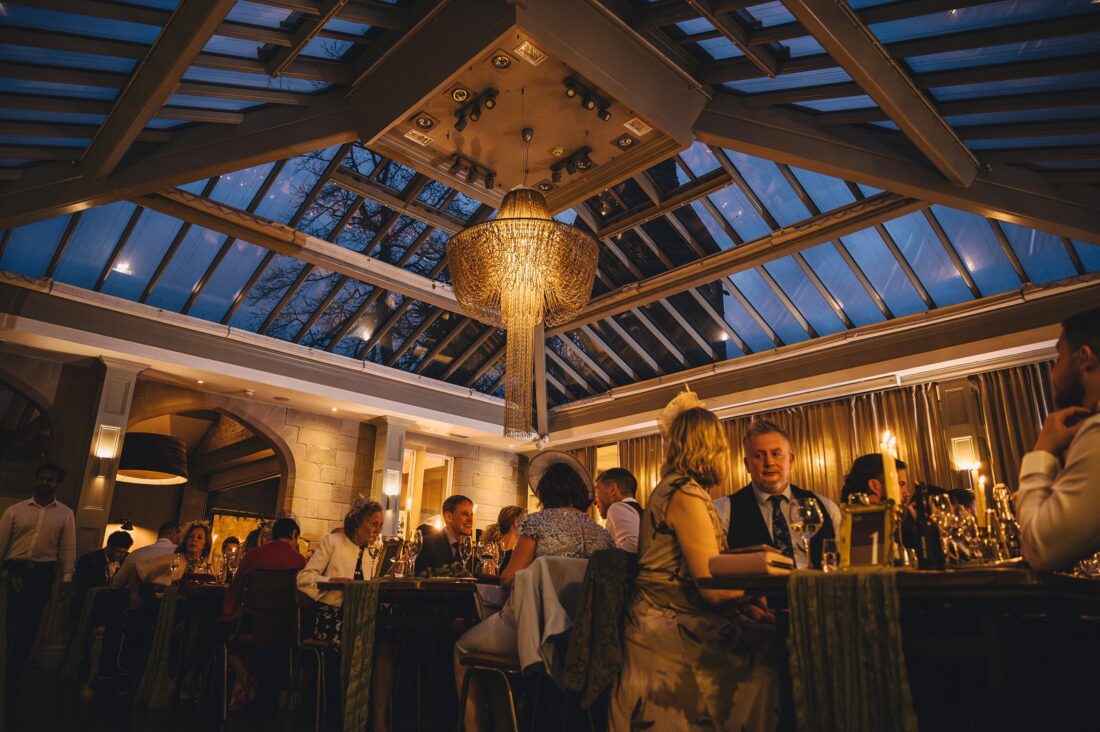
Winter timeline option 2: “Twilight wedding” (all about atmosphere)
13:30–14:30 Getting ready / final prep
15:00 Ceremony (often candlelit / indoors)
15:30–16:30 Drinks + canapés + cosy mingling
16:30–16:45 Couple portraits (quick daylight pocket)
17:00 Dinner
18:30 Speeches
19:30 First dance
19:45 onwards Party + night portraits / sparklers
Why this works: it leans into candlelight and atmosphere, but you still protect a small daylight pocket for portraits so your gallery has variety (not just indoor images).
A simple rule that makes this easy
If you care about natural portraits, plan at least one portrait pocket before sunset. Then treat night portraits like a bonus – 5 minutes, maximum impact, back to your guests.
Christmas time followed by the New Year always brings warm feelings of love and happiness. The atmosphere is truly magical. It does not matter that the weather is unpredictable and cold, those feelings will always be warm.
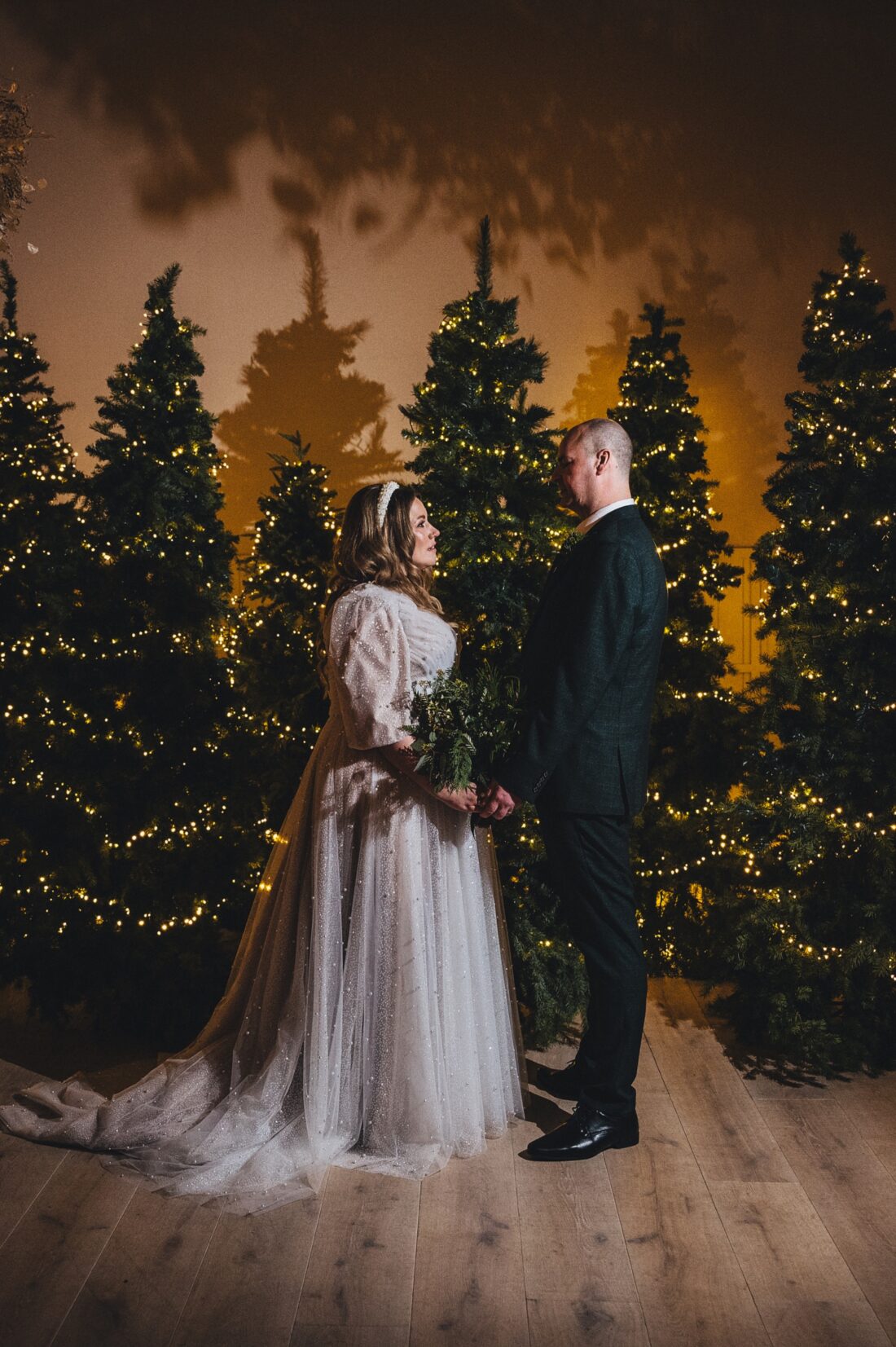
Winter wedding photography (how to get stunning photos in low light)
Winter weddings are where photography really matters, because the light changes faster, the day is often more indoor-led, and the atmosphere comes from candles, fairy lights and people being close together. The good news? If you plan a few simple things, your winter gallery can look unbelievably cinematic and totally real.
- Protect the daylight (even a little bit)
You don’t need an hour-long photoshoot. You just need one short pocket of daylight that’s protected in the timeline. The sweet spot is 10–15 minutes for couple portraits while it’s still bright, then (optionally) a 5-minute night portrait later. That’s it. That’s the magic formula. - Choose “good light rooms” for getting ready (it changes everything)
If you can, get ready in a room with: Big windows, pale walls, and space to move.
Those three things make your photos look cleaner, brighter, and more timeless – and they also help your film/photo team work quietly without turning your morning into a production. - Candlelit ceremonies: dreamy, but plan for faces
Candles look stunning, but the key is making sure you can still see you.
If you’re doing a candlelit ceremony, keep candles slightly forward (not only behind you), and use lots of them rather than a few tiny points of light. If the venue is very dark, it’s normal for a photographer to use discreet lighting so your faces stay clear and your photos don’t turn into grainy silhouettes. - Embrace the “winter glow” (fairy lights, fires, lamps, the bar)
Winter photos look best when there’s texture in the background: fairy lights, firelight, candles, warm lamps, the buzz of people around a bar.
If your venue has a fireplace, a snug, or a candlelit dinner set-up – lean into it. Those scenes don’t just look pretty; they make the story feel warm. - Night portraits: the quickest, biggest-impact photos you’ll ever do
A winter night portrait is usually a 3–5 minute “pop outside” moment.
We’ll find a good background (fairy lights, doorway light, reflections, or just clean darkness) and create something cinematic fast. No awkward posing. No long walk. Just a tiny pocket that gives you those “film still” images. - Flash in winter doesn’t have to look harsh
Some couples worry that flash equals cheesy. It doesn’t.
Used well, flash in winter is what keeps dancefloor photos sharp, lively, and full of colour, and it helps your venue look how it felt, not like a dark cave. Think: energetic, fun, editorial party photos… not “point and blast”. - What to ask your photographer (this is the trust test)
If you’re comparing photographers for a winter wedding, ask these questions – they’ll tell you everything:
Can we see 2–3 full winter wedding galleries (not highlights)?
How do you handle low light without ruining the atmosphere?
Do you bring backup lighting (and backup cameras) in case it’s dark all day?
What’s your plan if it rains and we’re indoors most of the time?
Who is actually photographing the day (you two, or associates)?
And for peace of mind: we’re THE MAYS (Marta + Artur), TWIA National Winners (2023) and now TWIA judges. Winter is genuinely one of our favourite seasons to photograph, because when you get it right, it’s not just “pretty” – it feels like a story.
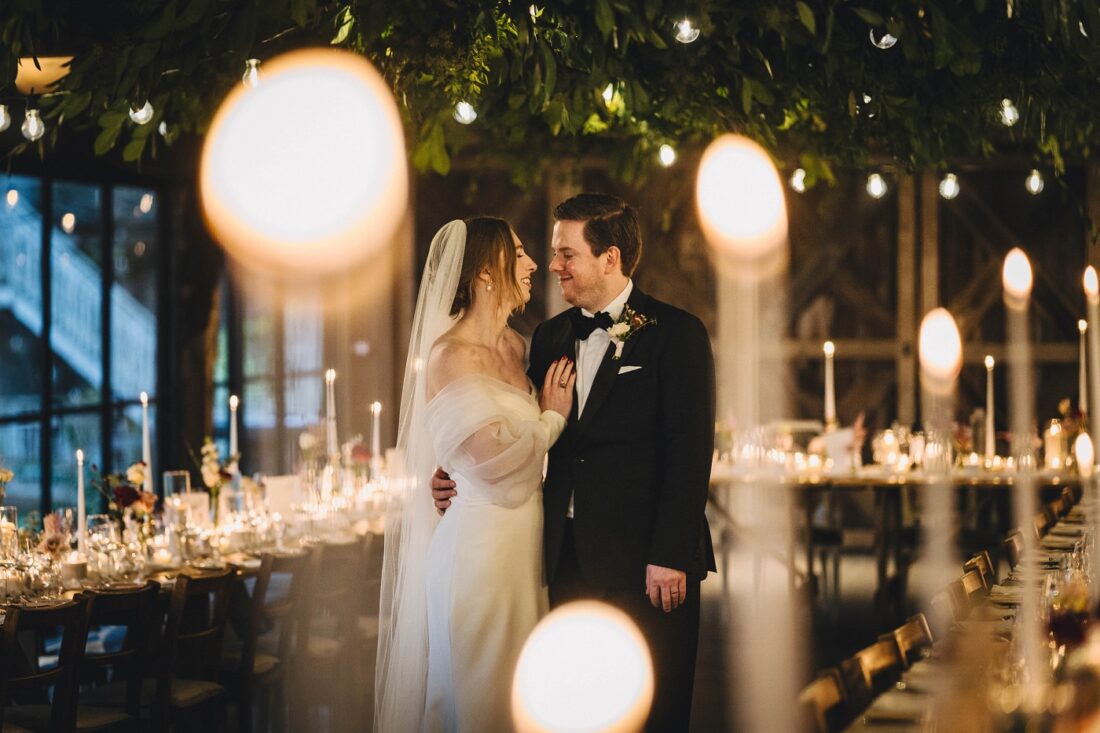
Warm guest experience (cosy winter wedding ideas that also photograph beautifully)
A winter wedding is at its best when it feels like your guests have stepped into warmth. When people are comfortable, they stop worrying about the cold, they stay close, and the energy instantly feels more intimate, which is exactly when documentary photos come alive.
- Start with warmth the moment guests arrive
If your venue has a fireplace, a snug, or even just a warm-lit entrance, make that the first “welcome scene”. A little table with candles, escort cards, and a warm drink station instantly sets the tone and gives guests something to do (and it creates lovely candid photos straight away). - Give people a reason to gather (not drift)
Winter weddings don’t need loads of “stuff”, they need a few cosy anchors:
• A fire pit or heaters outside (short, fun bursts)
• A hot chocolate / mulled wine station
• A warm bar area with soft lighting
These spots pull people together and keep the vibe buzzing without you having to “force” anything. - Keep outdoor moments short and intentional
Instead of sending guests outside for ages, plan one or two quick outdoor beats:
• 5 minutes for confetti
• 10 minutes for sparklers
• A fast group photo pocket
Then bring everyone back into warmth. You’ll get the winter atmosphere without frozen fingers and stressed faces. - Dinner lighting is everything (and it’s an easy win)
If you want your winter wedding to feel expensive in photos, focus on light, not extra décor. Candles (lots of them), warm fairy lights, and avoiding harsh overhead lighting makes the room feel like a film scene. It’s also more flattering for faces and makes speeches look emotional and intimate. - Think comfort details that guests actually use
The best winter details are the ones people genuinely grab:
• A basket of blankets by the door
• Umbrellas ready to go
• Heel stoppers (if it’s muddy)
• A little “warm-up” basket in the loos (hand cream, plasters, tissues)
These tiny touches become moments – guests laughing, helping each other, sharing blankets – and those moments photograph beautifully. - Build a “cosy pocket” into your timeline
Winter days can move fast, so plan one calm pocket where nothing is “happening”: drinks, canapés, a bit of music, people chatting. It’s often the most photographed part of the day because it’s where everyone is fully present.
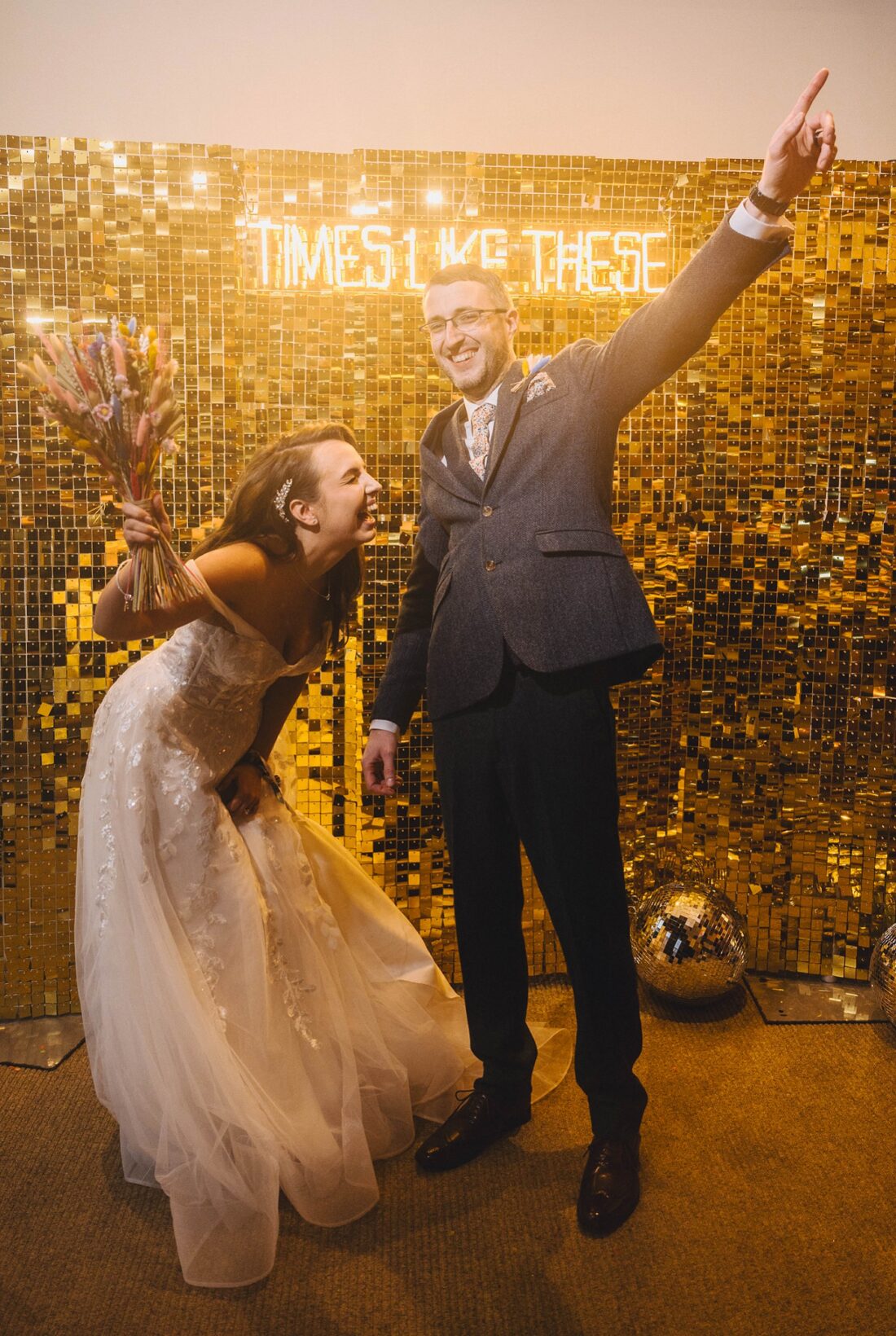
Iconic winter photo moments (and how to make them look incredible)
Winter gives you a few photo moments that just hit differently, because the light is moodier, the air is crisp, and the atmosphere kicks in earlier. Here are the big ones, plus the simple “how to” so they look amazing and don’t turn into stress.
- Confetti in winter (without freezing everyone)
Winter confetti is best when it’s quick, planned, and close to warmth.
How to make it work:
Choose a spot that’s sheltered from wind (courtyard, doorway area, or a wide path).
Keep it short: one big cheer, one walk-through, then straight back inside.
Use petals or biodegradable options that show up well on camera (and check venue rules).
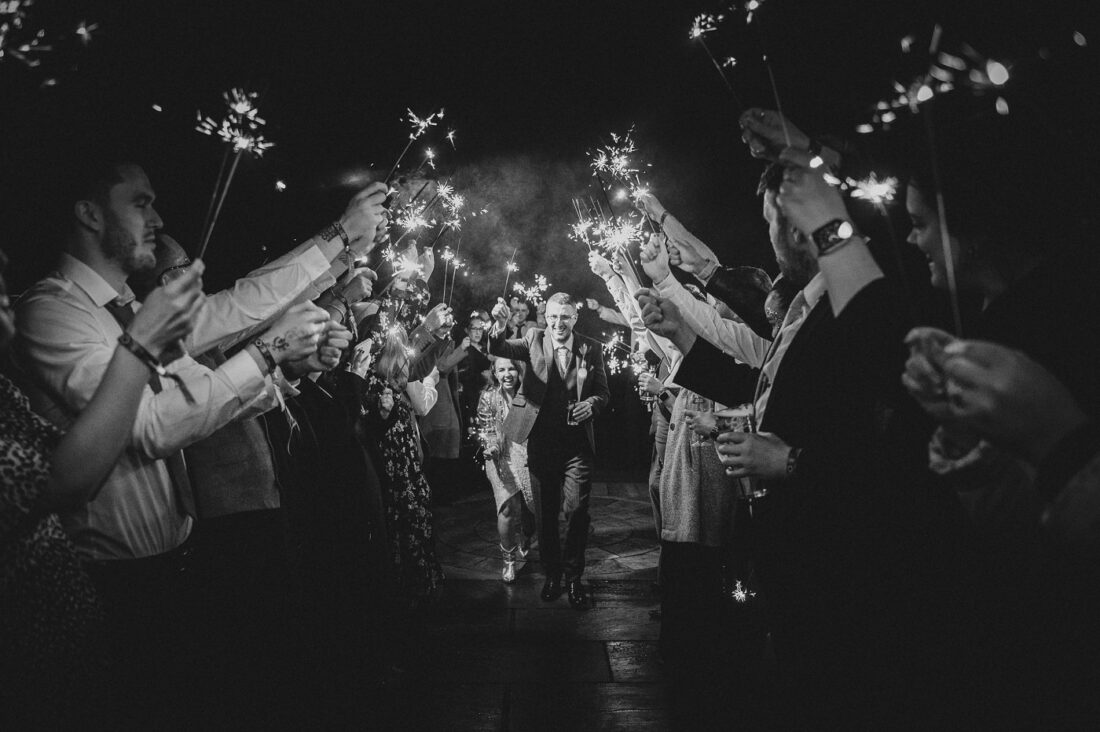
Ask your photographer to “stage the crowd” in a wide U-shape, it makes the photo look full, not thin. - Sparklers that actually look good (and don’t take 40 minutes)
Sparkler photos can be gorgeous… or chaotic. The secret is speed and numbers.
How to make it work:
Use longer sparklers (not the tiny ones)- they last longer and look brighter.
Have a “sparkler captain” (one confident friend) to hand them out and light them.
Get everyone ready first, then light all at once (don’t light one by one).
Do one simple plan: a tunnel walk or a quick group circle – then done.
Timing tip: do it when the dancefloor is already going so it feels like a fun mini-mission, not an interruption. - Night portraits (the 5-minute “film still” moment)
This is the winter photo cheat code. Five minutes outside can give you your most cinematic images.
How to make it work:
Pick a nearby spot with nice background texture (fairy lights, doorway light, lit windows, reflections, clean darkness).
Keep it short: 3–5 minutes is enough.
Don’t overthink posing – think: walk together, cuddle in close, laugh, breathe.
Then straight back to your guests. It should feel like a little secret moment, not a photoshoot. - Candlelit ceremony or candlelit dinner (warm, romantic, timeless)
Candlelight photographs beautifully, but faces matter – you want atmosphere and expressions.
How to make it work:
Use lots of candles rather than a few small ones (clusters create real glow).
Keep candles slightly in front / around you, not only behind you.
If the room is very dark, discreet additional lighting can keep your photos clear without killing the vibe. - The “cosy chaos” moment (best documentary photos of the whole day)
Winter weddings create brilliant candid moments because everyone gathers close:
people warming hands by fires, hugging in coats, laughing at the bar, sharing blankets, clinking warm drinks.
How to make it happen:
Create one cosy focal point (fireplace, snug, hot drink station, warm-lit bar).
Then leave people alone to be themselves. That’s when the real photos happen.
Real beautiful winter weddings:
Winter is one of those seasons where the photos only really make sense when you see a full story, not just a highlight reel. The glow, the closeness, the candlelit moments, the “everyone in the same room laughing” energy… that’s the good stuff.
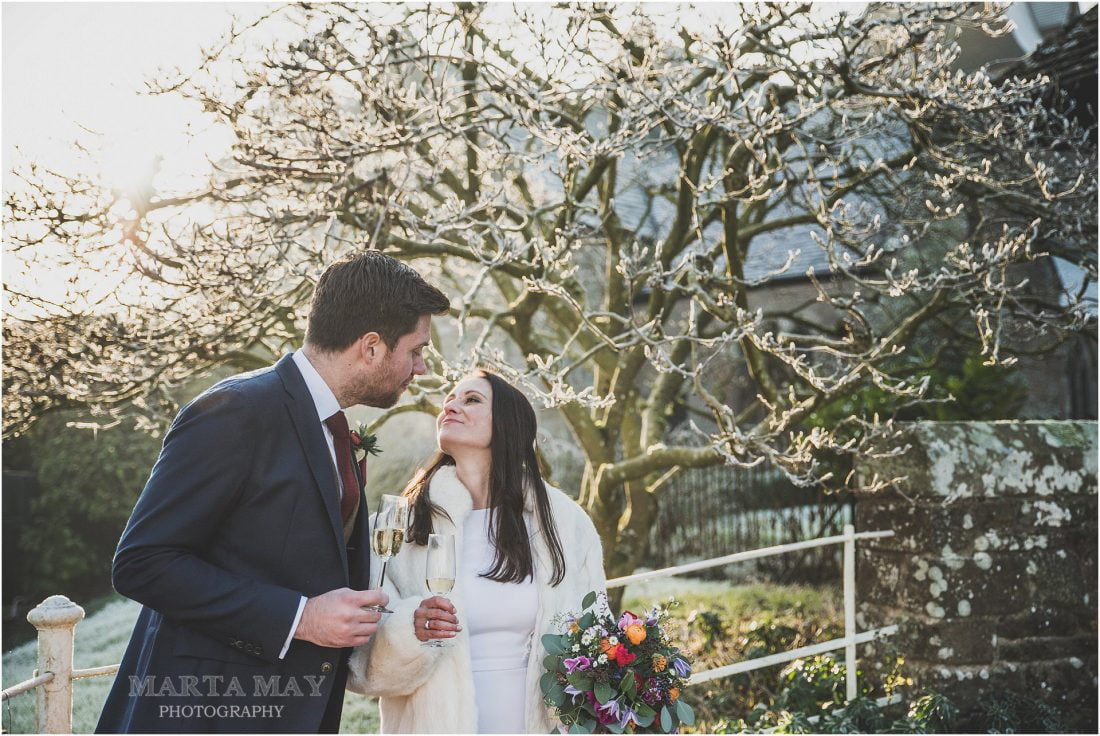
Winter weddings at Dewsall Court
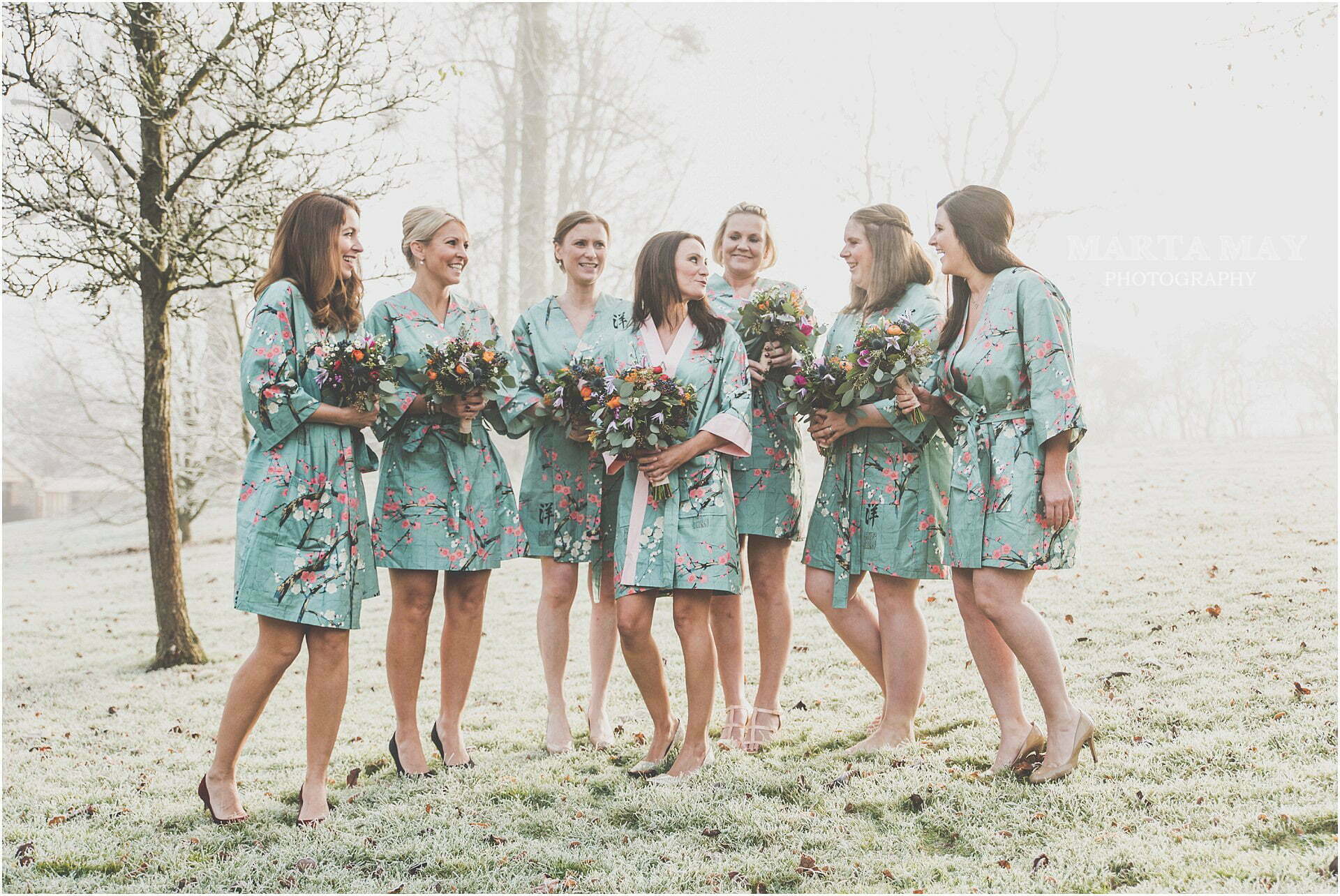
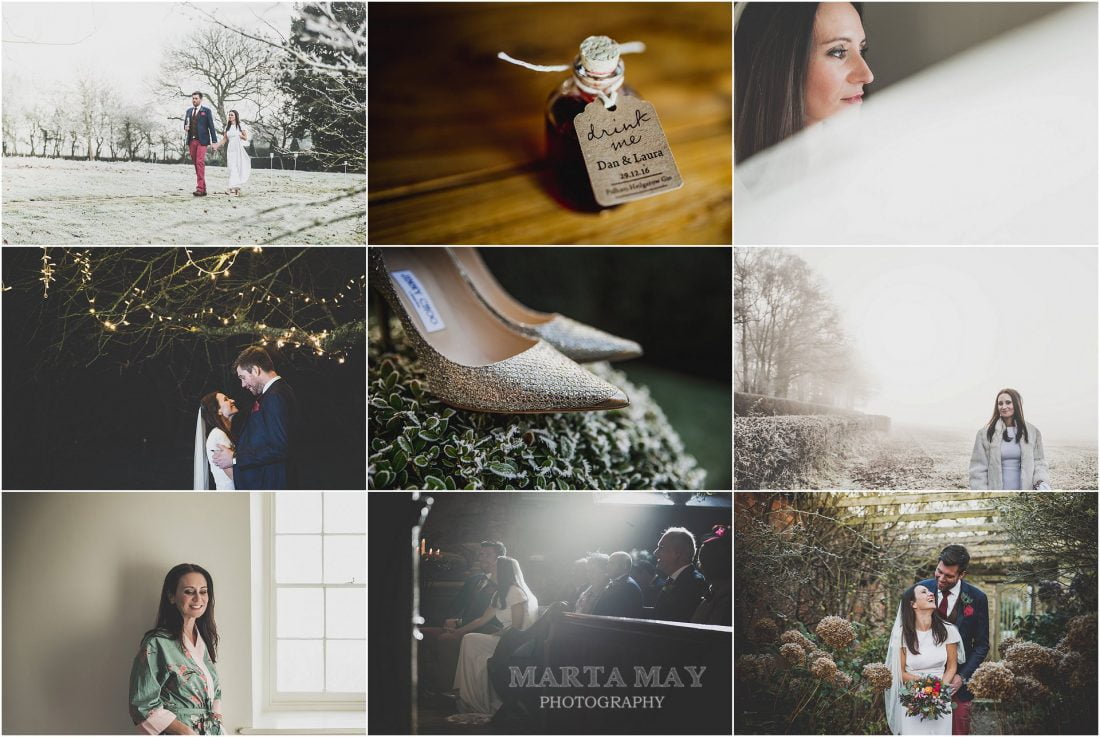
This year we were lucky enough to shoot a white winter wedding. We managed to go outside for a few pictures on that frosty and foggy wedding morning. Here are the pictures:
Glewstone Court winter wedding
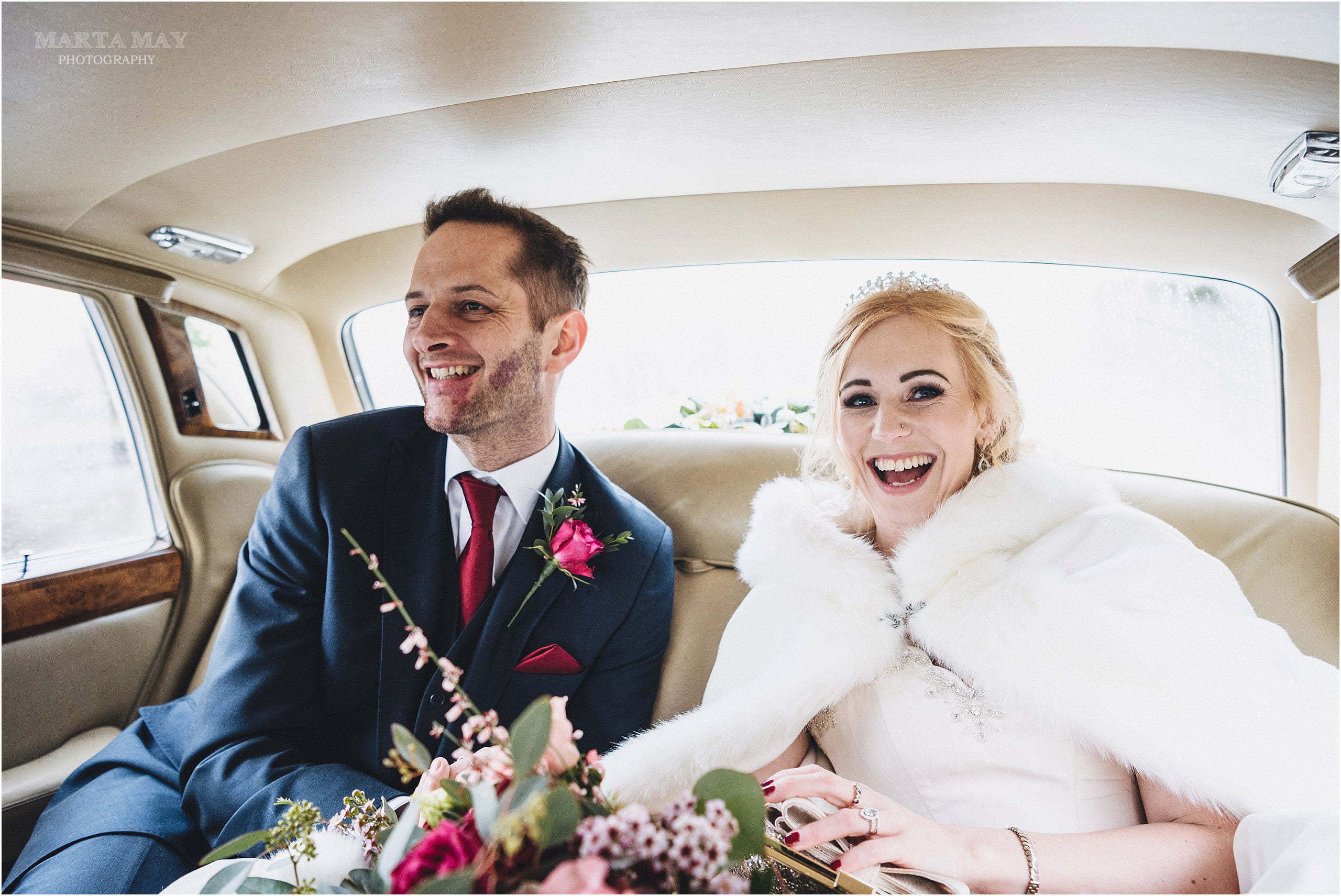
What do you think about winter weddings? This bride told me she loves cold winter days so much that she has always wanted to get married in winter. That’s why the couple got married on the 6th January! She looks like a princess from Disney movies, we loved photographing that wedding:
FAQs: Beautiful winter weddings (UK)
1. Are winter weddings cheaper in the UK?
Often, yes – especially for venues and suppliers in off-peak months. However, it depends on the venue, your date (December can be premium), and whether you’re booking a Saturday. The best approach is to ask venues about “off-peak” or “winter” packages and compare like-for-like.
2. What time should we have our ceremony in winter?
If you want natural-light portraits, aim for roughly 12:00–2:00pm. That protects daylight for couple photos and keeps the day feeling unrushed. If you’re planning a twilight wedding, protect at least one short daylight pocket earlier.
3. Will we still get great photos if it rains all day?
Yes, as long as you plan for an indoor “version” of your day that still feels beautiful. Choose a venue with big windows and atmospheric indoor spaces, keep portraits short, and use a couple of quick weather gaps for outside moments (even 2 minutes can be enough).
4. How do we stay warm without ruining the photos?
Wear layers that look good: a smart coat, cape, faux fur, shawl, or textured knit. Keep hand warmers nearby, and plan outdoor moments in short bursts. Warm guests look happier in photos – it’s that simple.
5. Can we do confetti in winter?
Absolutely. The trick is choosing a sheltered spot and doing it quickly so guests aren’t standing in the cold. Petals and biodegradable confetti usually show up best, but always check your venue rules.
6. Are candlelit ceremonies too dark for photos?
Not if they’re planned well. Use lots of candles (clusters), keep some light in front of you (not only behind), and trust that a good photographer can keep faces clear without killing the atmosphere.
7. What should we ask a photographer before booking a winter wedding?
Ask to see 2–3 full winter galleries (not highlights), ask how they handle low light and rain, and ask about backups (cameras/lighting). Winter is where experience shows – you want someone who can keep it beautiful whatever the weather does.
GET IN TOUCH
If you’re planning a winter wedding and want photos that feel real, cosy, and cinematic (without awkward posing), we’d love to hear about your plans.
Check availability here